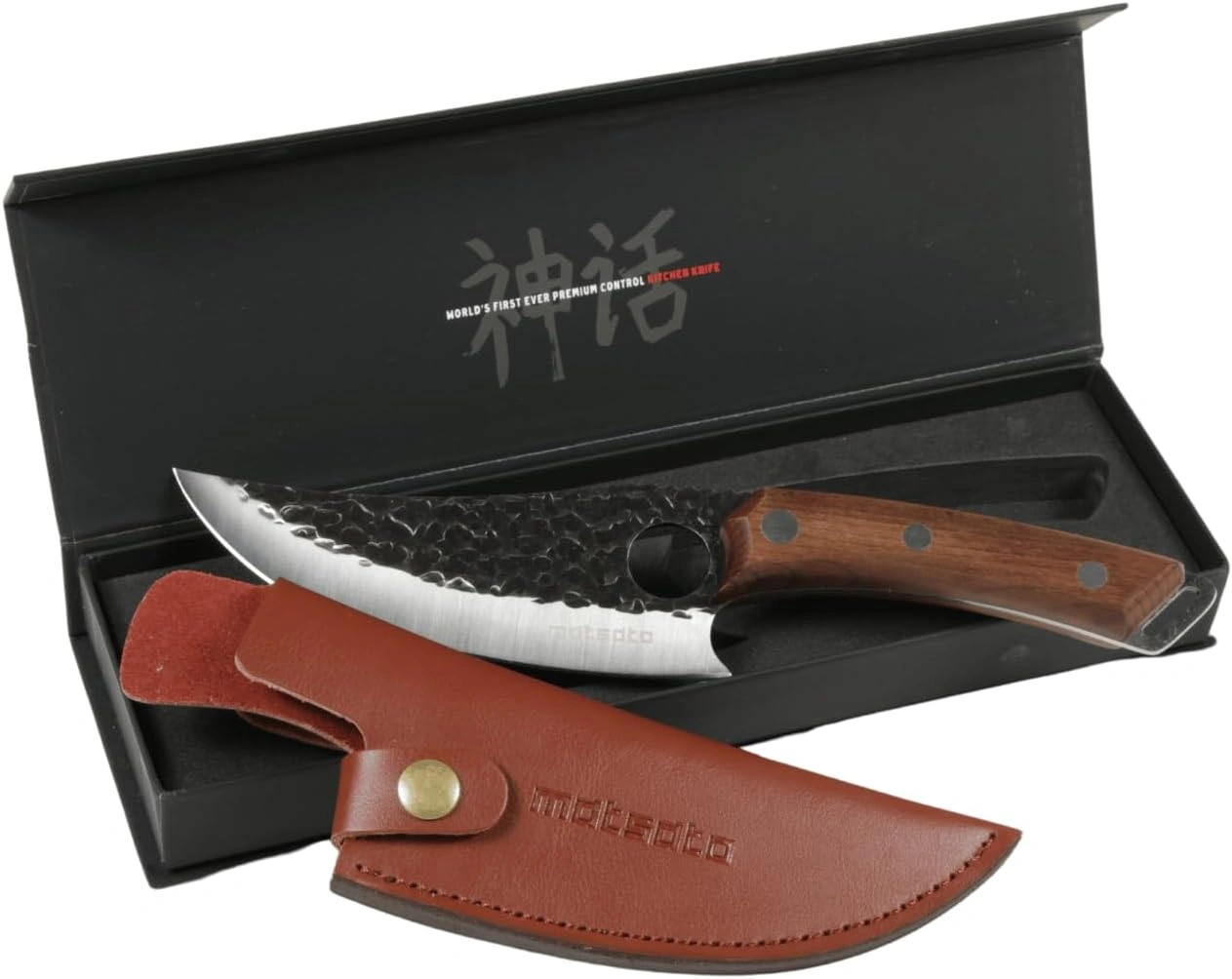
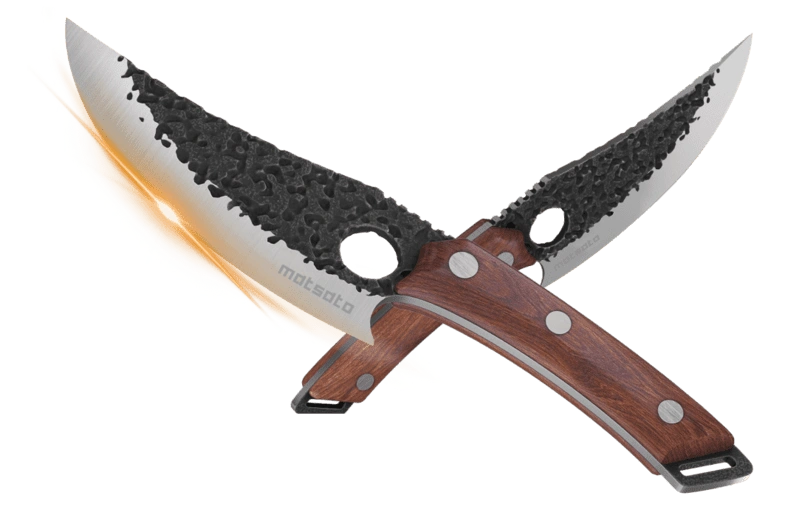
Every kitchen knife eventually fails — but the failure mode and the timeline depend almost entirely on the decisions made during its construction. Cheap knives fail because the steel is soft enough to permanently deform under daily cutting stress, because the handle is attached rather than full-tang and eventually works loose, and because the edge geometry was designed for sharpness out of the box rather than durability across years of use. The Matsato knife was engineered specifically to address each of these failure points.
The 58 HRC steel hardness is the first answer: at this hardness, the blade resists the permanent deformation that causes cheaper knife edges to round off rather than stay aligned. The 138-step forging process is the second: it aligns the steel grain along the blade length, so the edge degrades far more slowly under the lateral stresses of daily cutting than randomly oriented stamped steel. The full-tang rosewood construction is the third: a blade that runs the full length of the handle as a single piece of steel cannot loosen, wobble, or separate regardless of how many years of daily use it undergoes.
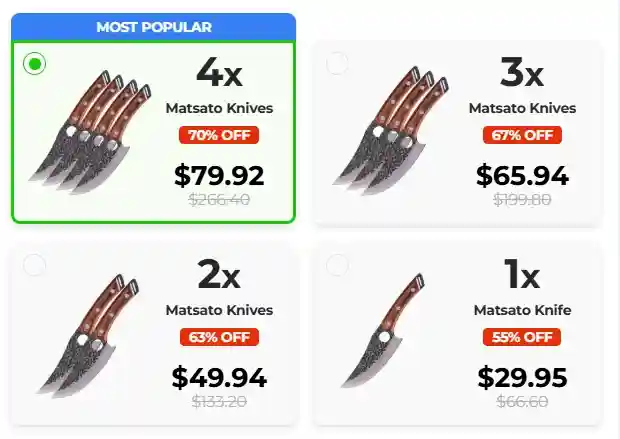
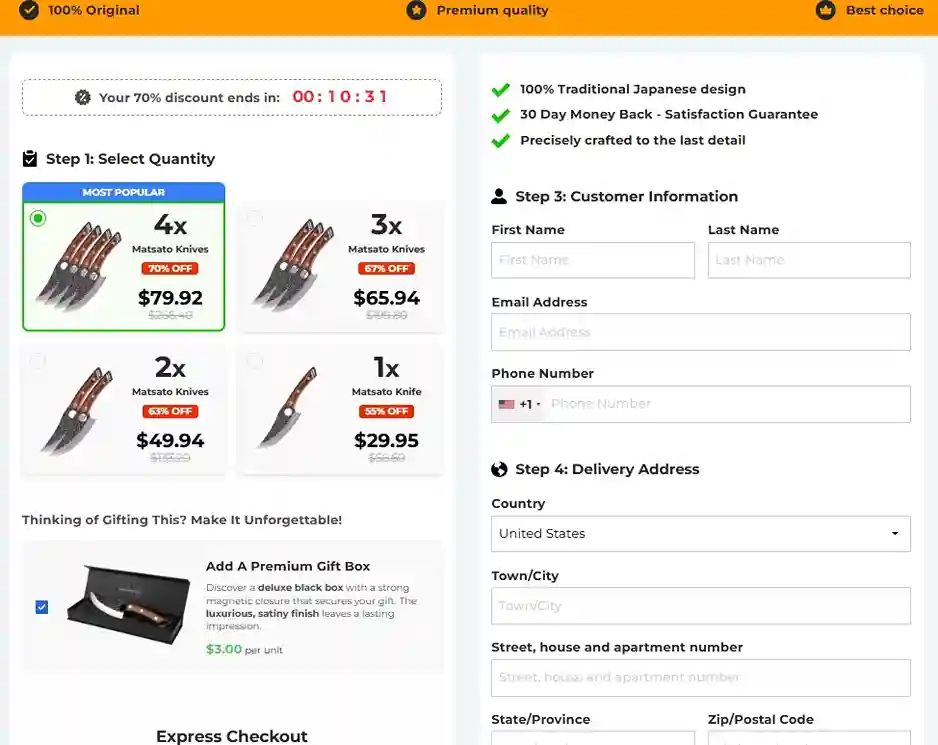
The Matsato knife is not positioned as the cheapest option or the flashiest one. It is the knife that makes economic and practical sense for anyone who cooks regularly and is done with the cycle of buying, degrading, and replacing blades that were never built to last. 16,666 verified customers across the USA have made that calculation and reached the same conclusion. Verify current pricing on the official website before purchasing.